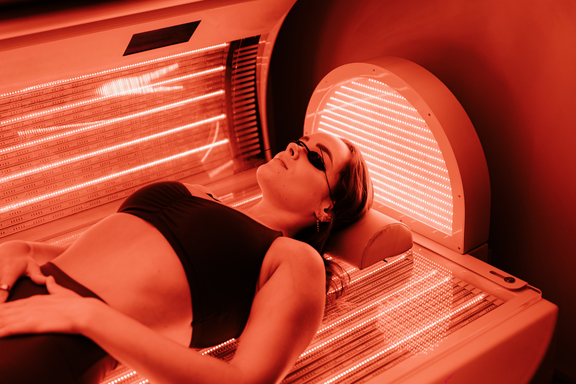
For years, recovery technology sat on the edge of wellness: a device or two tucked in the corner of a gym, mostly reserved for pro athletes chasing a competitive edge. That edge is now the center of the industry, and it's happening faster than most brands are prepared for.
Recovery tech went mainstream, fast
Full Body Light Therapy is a great example. What used to be a niche biohacking tool is now something everyday guests actively seek out, and the growth numbers back that up. The category is on track to more than double in size over the next several years, with double-digit annual growth that shows no signs of slowing. Infrared heat therapy is telling the same story: steady, strong growth, with wellness and recovery now the biggest reason people walk in the door, ahead of any clinical use case.
The pattern across the board is simple. What guests once treated as a splurge, they now expect as a baseline. Light therapy in particular has crossed over from a nice-to-have into something closer to table stakes across fitness, spa, and hospitality spaces. The guests asking for it aren't just athletes or biohackers anymore. They're members who read a headline about inflammation or sleep quality and want to know where they can go try it themselves, without booking a flight to a wellness resort to do it.
That shift matters because it changes what guests expect walking into any wellness space, not just the ones built specifically around technology. A brand that can't offer it is increasingly seen as behind, not niche.
Why this matters if you're evaluating a franchise
Recovery-focused brands have been scaling quickly on the back of this shift, and that is a strong signal: this demand isn't confined to wellness hotspots like LA or Austin. It's showing up everywhere, in suburban strip centers and mid-sized markets as much as major metros, which is exactly the kind of footprint a franchise model depends on.
Heights Wellness Retreat wasn't built to bolt this trend on after the fact. Wellness Technology has been one of our three core pillars since day one, standing right alongside Hands-On Care and Social Club. A guest moving through the Ascension Circuit isn't visiting a spa that recently added a gadget. They're visiting a Retreat that was designed around the idea that Full Body Light Therapy and a Full Spectrum Infrared Sauna System deserve the same billing as massage and skin therapy, because that's exactly what guests are asking for.
That's the real opportunity for a prospective Franchise Owner. Competitors built around a single service are now scrambling to retrofit wellness technology into a model that was never designed to hold it: carving out square footage, retraining staff, and rebuilding a guest experience around equipment as an afterthought. Heights Wellness Retreat doesn't have that problem. The Ascension Circuit was part of the blueprint from the start, not a renovation.
Our Path to membership model already reflects how guests actually want to engage: some purely hands-on, some purely tech, and a growing number who want both, which lines up exactly with where the market is heading. That flexibility is a structural advantage, not just a nice feature. A brand still figuring out how to bundle technology into its offering is solving a problem Heights Wellness Retreat solved before opening its first location.
For a Franchise Owner, that translates into a business built to meet guests wherever their interest currently sits, rather than one hoping guests adjust to whatever the original concept happened to offer. As appetite for tech-forward wellness keeps climbing, that built-in range is exactly what lets a Retreat grow with the guest instead of chasing them.
Bottom line
Consumer appetite for evidence-backed recovery and wellness technology isn't a passing fad. It's a real shift in how people think about self-care, and it's big enough to reshape the industry over the next decade. Heights Wellness Retreat was built three pillars deep for exactly this moment.